 Fast UK delivery



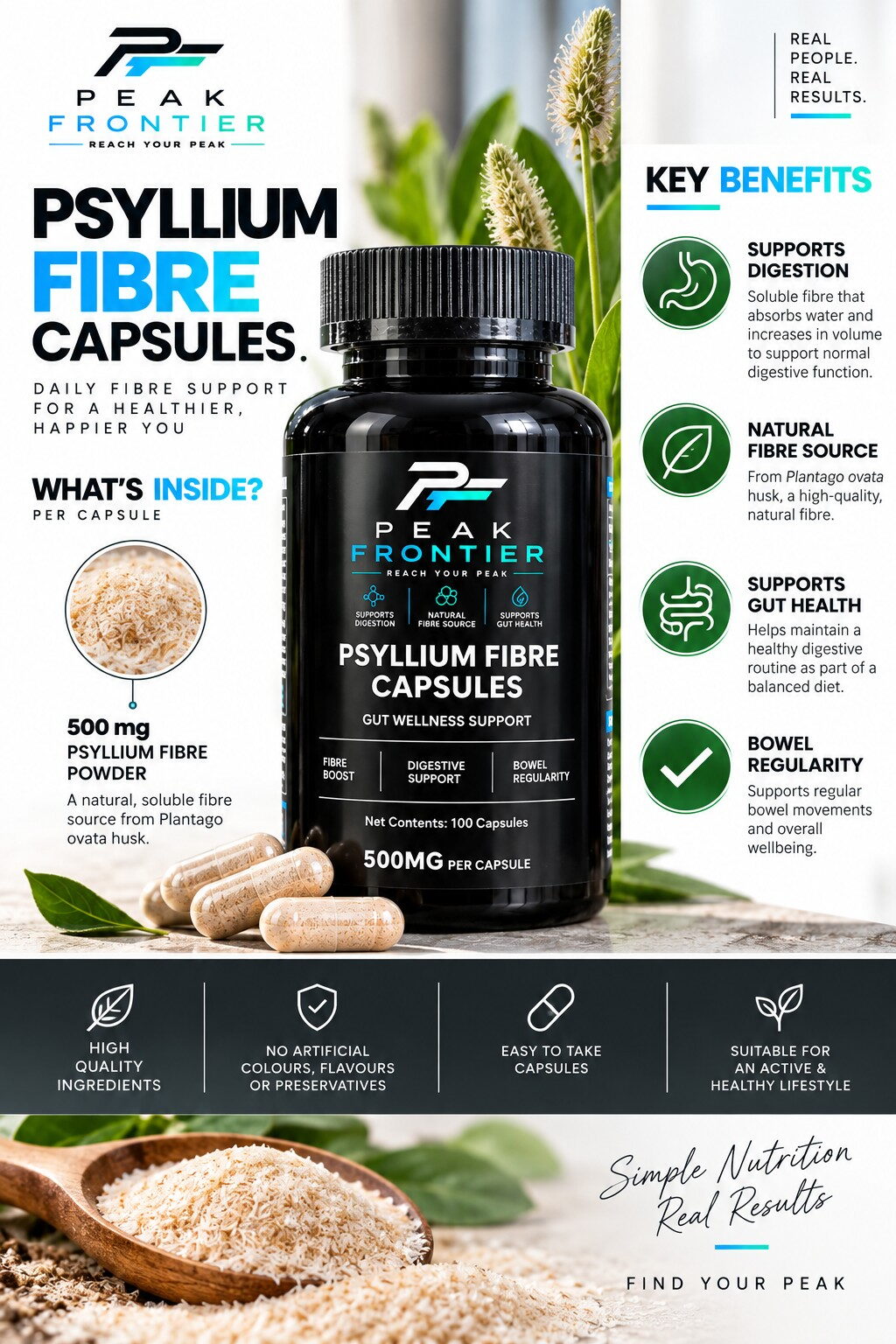

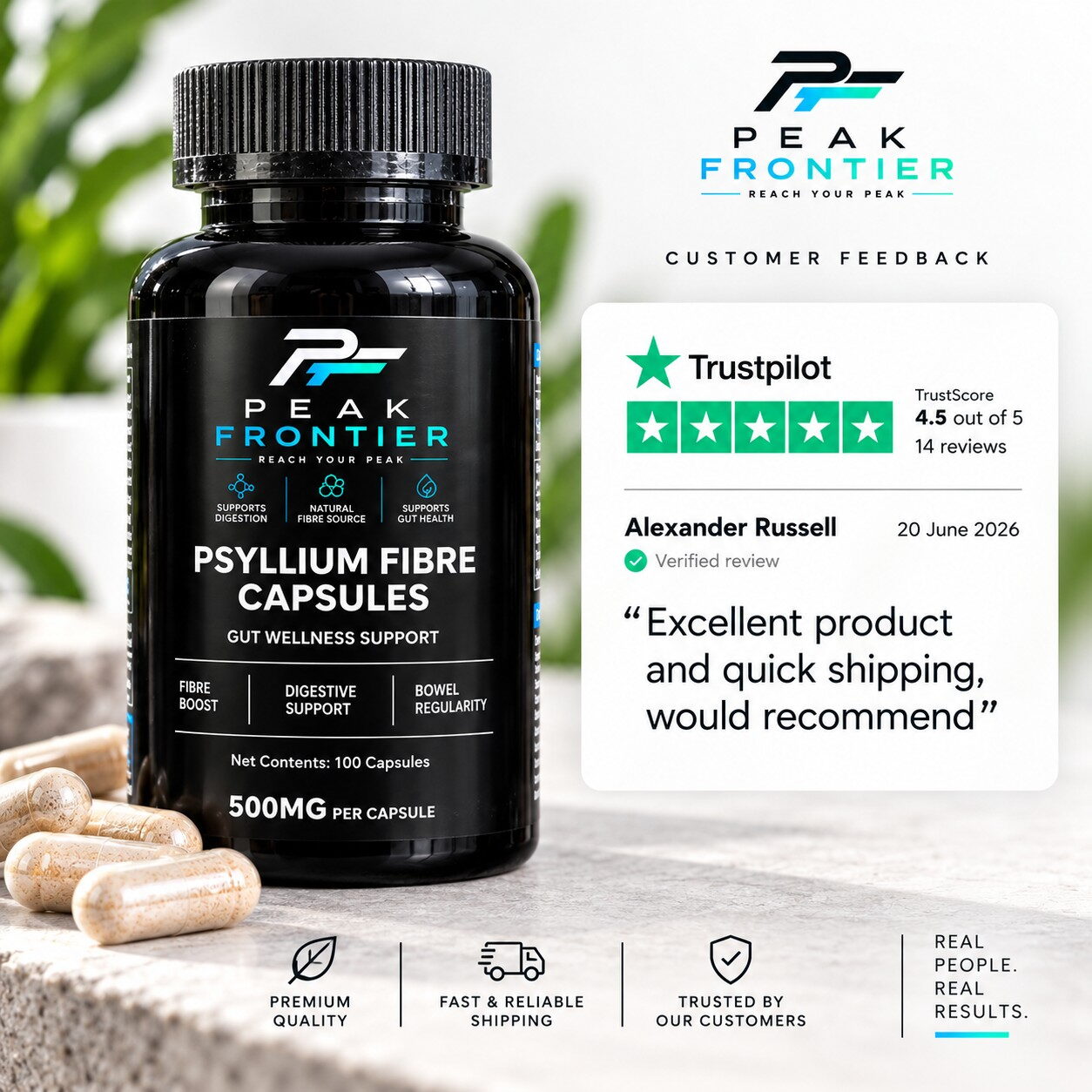
Simple Fibre for Your Everyday Routine
Getting enough fibre isn’t always easy. The NHS points to everyday foods for it, such as wholegrains, beans and lentils, vegetables and fruit.
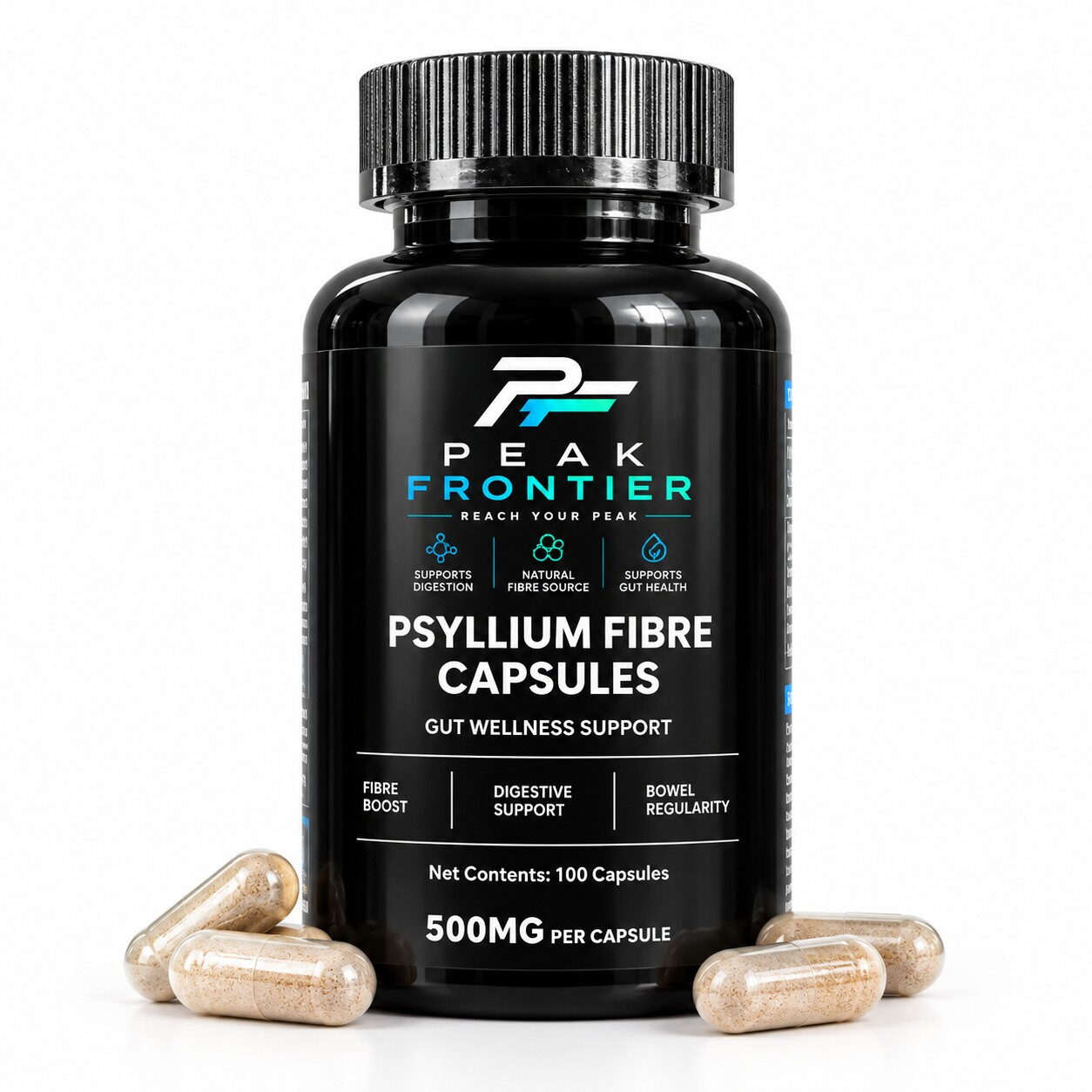
Peak Frontier psyllium husk capsules are a simple way to add psyllium to your day, without mixing powders or changing your routine.
New to psyllium husk? Our beginner’s guide to psyllium husk fibre covers what it is before you buy a bottle.
The Short Version
100 capsules a bottle. How long a bottle lasts depends on the serving printed on the label.
Capsules, not powder. No scoop. No shaker. Nothing to taste.
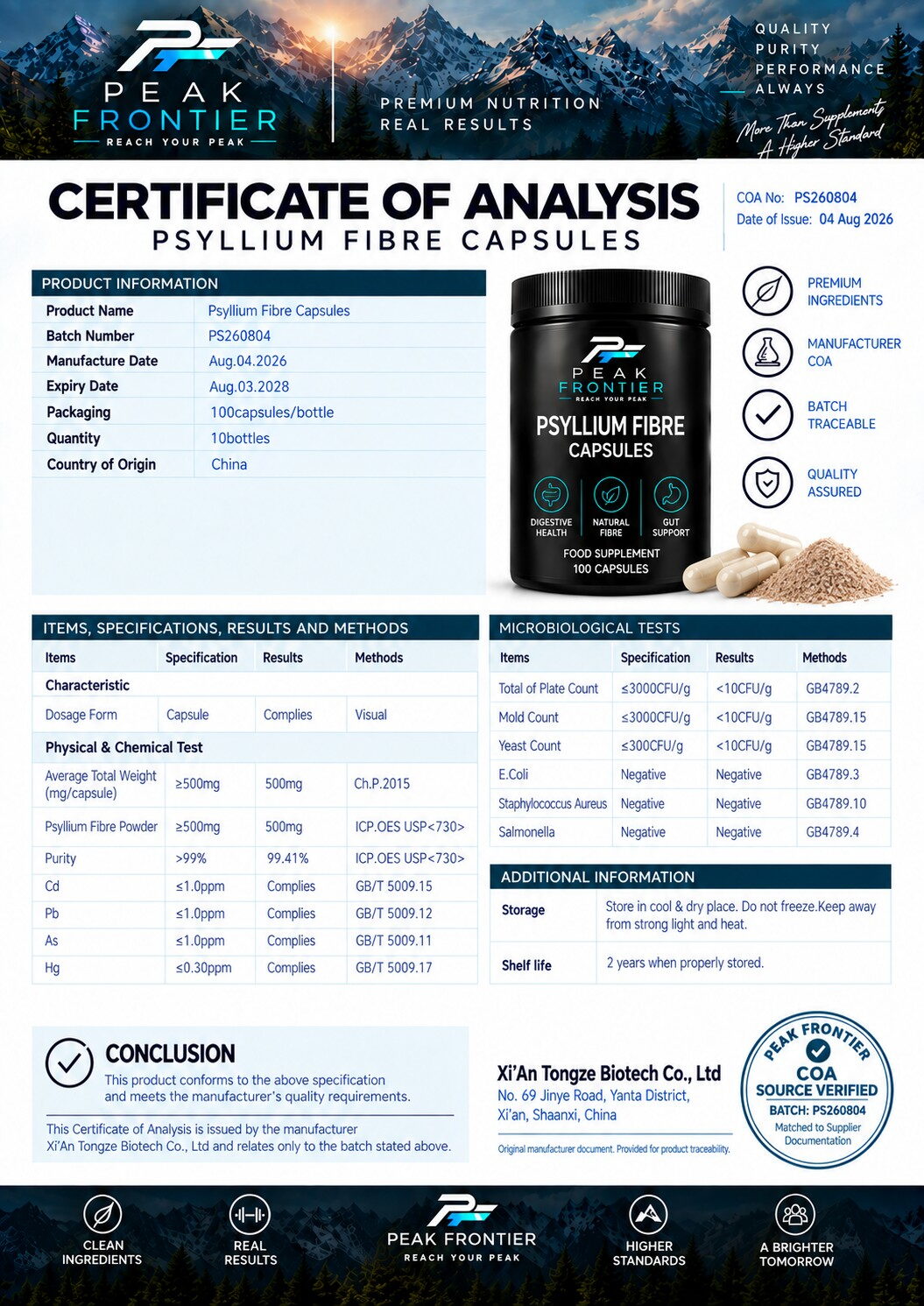
If you have been comparing fibre tablets, this is the capsule version: psyllium husk fibre in a shell you swallow whole. You can read the certificate of analysis before you order.
Made for Everyday Life
Whether you’re sorting out your nutrition for the first time or your training and diet are already dialled in, fibre is part of a balanced diet, the kind the government’s Eatwell Guide sets out. A fibre supplement goes alongside your food.
In UK law a food supplement is a food sold in dose form, such as a capsule, to supplement the normal diet. Capsules make adding psyllium to your routine straightforward, without another powder or shake to prepare.
Psyllium is also one of the ten products in our Peak Complete bundle, if you’d rather buy the range in one go.
Who Is It For?
Adults who want a simple, convenient way to add psyllium to their day, particularly anyone who finds fibre easy to forget in a busy week.
It also suits people shopping for fibre supplements in the UK who would rather swallow a capsule than stir powder into water. If you are working out what else belongs in your cupboard, here is how to build a supplement stack one product at a time.
Follow the directions on the label, and enjoy it as part of a varied, balanced diet and a healthy lifestyle.
Sources
- NHS, How to get more fibre into your diet, last reviewed 2 March 2026.
- GOV.UK (OHID), The Eatwell Guide, last updated 2 January 2024.
- The Food Supplements (England) Regulations 2003, regulation 2: interpretation, legislation.gov.uk.